He has spent the decades since working out what to do with all of it — as a waiter, a music industry press agent, a BBC producer, a restaurant owner, a gardener, a novelist, a food writer and, now, a memoirist writing at a kitchen table in New York’s West Village.
Every Scottish child knows the word clype — it is a grass, an informer, a prattle, a teller of tales — one who cannot keep the secret in. It is also a word that can be turned in the hand like quartz, catching the light differently each time.
The title is inspired by a psychiatric report. It was commissioned by the defence team in Philip’s civil case against the school where he was abused. It is a document designed to suggest that Philip is exaggerating what happened and its impact. The psychiatrist notes that Philip tells stories for a living. He is a raconteur. What the report is really asking is whether he is a reliable witness in his own story.
Storytelling has been Philip’s means of survival. It’s how he has reframed the damage of the past. Now he has broken the rule of being a clype, they don’t like it. Speaking the silences, breaking open the secrets — clyping is a betrayal. But it is also truth telling. Depending on who is asking.
Clype begins with the death of Philip’s adopted mother and ends with his abusers finally facing justice. In between are the years it took him to rebuild. From the farm in Scotland, the schools that did lasting damage, growing up gay in the early AIDS years, a decade in the wilderness and when everything else had broken down, the long, slow, process of rebuilding his integrity.
It is a book about what a child carried when he could not speak his truth. It reveals how the secrets can poison adulthood and what is revealed when he finally clypes on the people and institutions who stood by and watched.
Forthcoming
He has written on lifestyle and culture for a range of newspapers.
As a food writer, Philip was represented by Maggie Hanbury.
He is the author of Cooking Without Recipes (Little Brown, 2011) and the novel Daniel, at Sea (Backlash Press, 2020).
He has recently completed the script of his first play, Dead & Wounded. Currently in development.
His opinion pieces in The Times on the abuse and violence in Scotland’s elite schools have helped bring justice for survivors and contributed to one of the largest school abuse inquiries in Scottish legal history.
Philip’s Substack is where the memoir is finding its public shape — essay by essay, from the same table where he makes his tea and thinks about everything else.
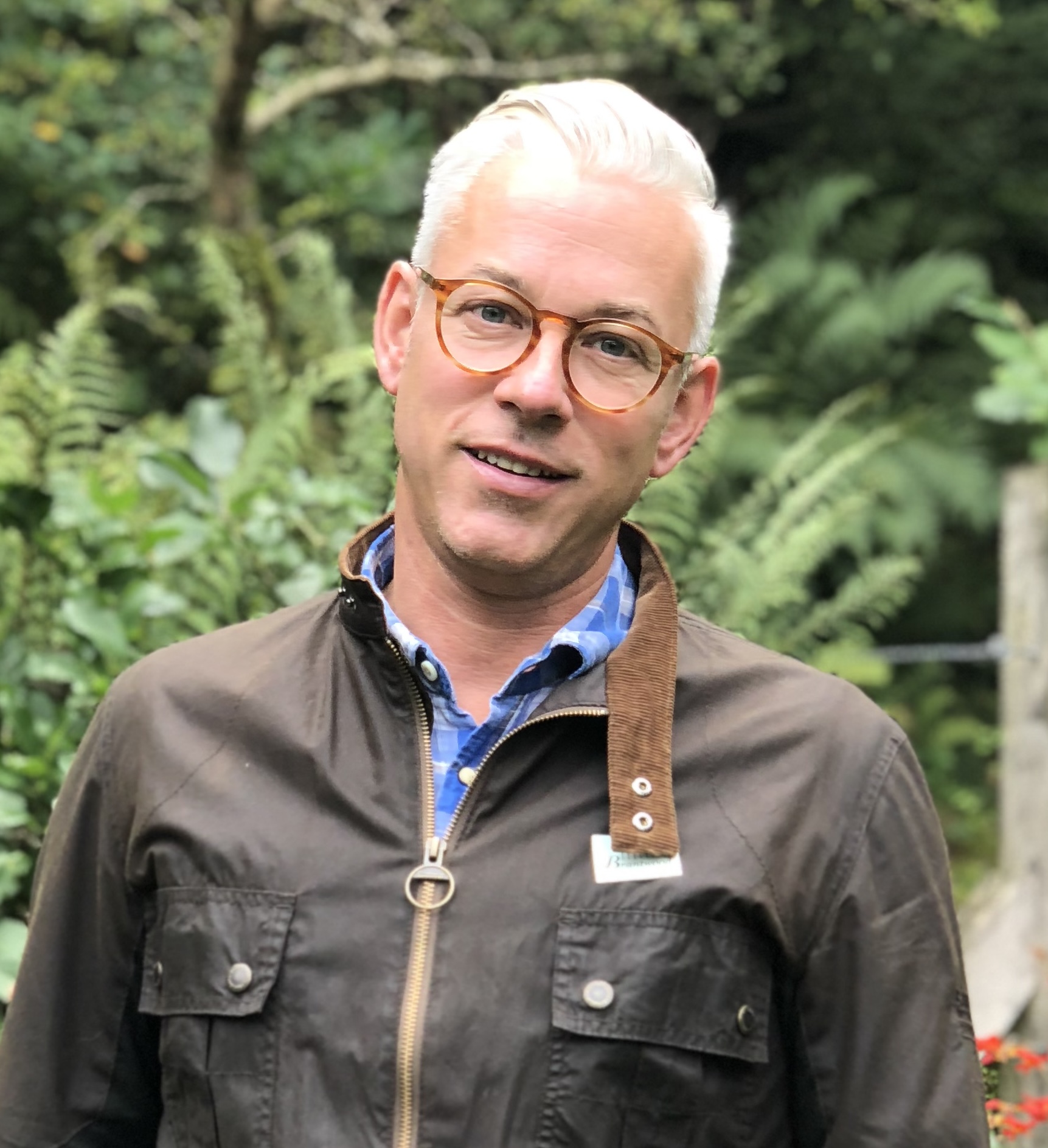
Philip Dundas grew up adopted, on a farm in rural Scotland. He was expelled from school at seventeen, drifted through a wilderness of drugs, bad luck and borrowed talent, and came out the other side with a ferocious appetite for life and a talent for starting over.
He read English at Oxford and took an MPhil by research at Glasgow. He spent six years as Senior Producer at the BBC, leading the Digital Curriculum team. Before that he had worked the music business — press officer to the London Records artists — until that life ran its course. After the BBC he co-founded PipsDish, a restaurant and community food enterprise in London that fed thousands over five years and took him into a youth offenders’ prison in Belfast to cook.
His food blog, launched in 2007, was nominated for a Guild of Food Writers Award. Cooking Without Recipes was published by Little Brown in 2011. His novel Daniel, at Sea was published by Backlash Press in 2020. He has recently completed the script of his first play, Dead & Wounded, currently being developed with a director in New York. He has written on lifestyle and culture for a range of newspapers.
When a BBC programme in 2022 exposed decades of sexual abuse at his Edinburgh school, he came forward, gave evidence at the Scottish Child Abuse Inquiry, and wrote about it in The Times. He helped bring criminal charges against teachers who had assumed, correctly until then, that silence would hold.
He is now writing Clype.
Daniel, at Sea, published in 2020 and subsequently revised page by page in close collaboration with a Sunday Times bestselling author, remains available for representation.

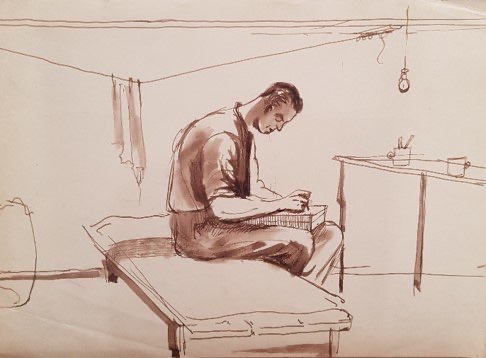
Drawing by Keith Vaughan, c.1946